
8 Lived-In Examples of a Letter to Your Best Friend for 2026
- Soulknit
- Feb 8
- 16 min read
The Words We Keep Close
Friendships are built in small, observed moments. We might think grand gestures define them, but more often, it’s the simple check-in, the shared memory of a pet’s funny habit, or the unspoken understanding during a difficult time. A letter to your best friend isn’t just about marking an occasion; it’s a way of holding one of those moments up to the light. It's a tangible piece of presence, a way to say 'I see you' and 'I remember' in a world that often moves too fast.
This collection isn’t about finding the perfect template. Instead, it’s a series of lived-in examples, letters born from real-life moments of grief, joy, and the simple act of noticing. Each one is grounded in the realities of companionship, often with a beloved pet nearby, offering a way to find words that feel true to your own story. We will explore letters that navigate the complex emotions of pet loss, the excitement of a new adoption, and the vulnerability of asking for support when a companion is unwell.
You’ll see examples of gratitude for a friend's help, playful celebrations of a pet's unique personality, and honest reflections on the struggles of pet parenthood. Through these specific, heartfelt notes, we’ll see how writing a letter to your best friend can transform an ordinary feeling into a lasting keepsake. This is not about instruction, but observation, offering a gentle guide to articulating the connections that matter most.
1. A Letter to Hold a Friend’s Grief
The bond we share with our animal companions is profound, and their loss leaves an unmistakable void in our lives. When a best friend is navigating this unique and often misunderstood grief, a letter to your best friend can become a lifeline. It isn’t just about offering condolences; it's about validating a relationship that was real, deep, and deserving of remembrance. This kind of letter honours the love they shared with their pet and acknowledges the true weight of their absence.
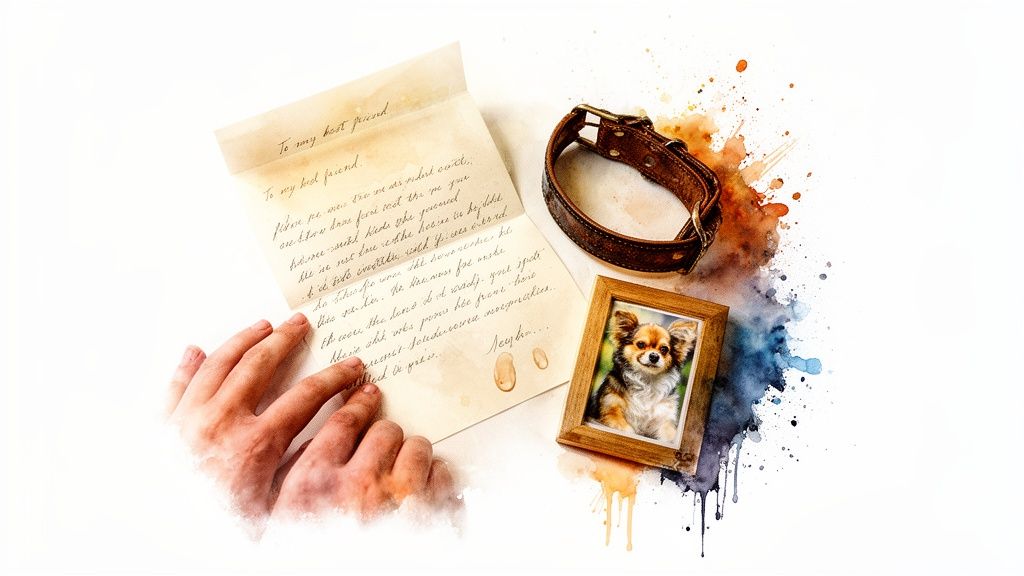
This approach moves beyond simple sympathy and steps into shared mourning. It’s about creating a space where your friend’s sorrow is seen and held without judgment. It’s a chance to remind them that their feelings are valid and that their pet’s memory matters, not just to them, but to you as well.
How Presence Feels on Paper
A letter written in this spirit focuses on memory over platitudes. It’s a testament to the fact that you saw their pet not just as an animal, but as a cherished family member.
Speaking Their Name: Mentioning the pet’s name feels personal. It honours their unique identity and the specific place they held in your friend’s life. I remember how you’d call Leo’s full name, Leonardo, when he was being mischievous.
Sharing a Specific Memory: I can still picture the way Max would greet me at the door, wiggling his whole body and bringing me his favourite squeaky toy. Recalling a small moment you witnessed between your friend and their pet makes the memory tangible and real.
Offering Tangible Help: Grief can be overwhelming. Instead of a vague “let me know if you need anything,” an offer like, “I’m bringing over dinner on Tuesday evening,” or “I can come by and help pack away Bruno's things when you're ready, no rush at all,” gives them one less thing to think about.
Validating Their Pain: Phrases like “they’re in a better place” can sometimes miss the mark. A simple “My heart is breaking for you, and I am so incredibly sorry for your loss” is often more powerful. Your authentic presence is the most important gift.
2. A Letter Sharing the Hope of a New Beginning
The decision to welcome a new animal into your life is a moment brimming with hope, excitement, and a touch of nervous energy. Sharing this milestone through a letter to your best friend transforms a simple announcement into a shared celebration. It’s an invitation for them to be part of a new chapter, one filled with the promise of muddy paws, soft purrs, and unconditional love. This kind of letter captures the pure joy of a fresh start and honours the significance of choosing to care for another being.
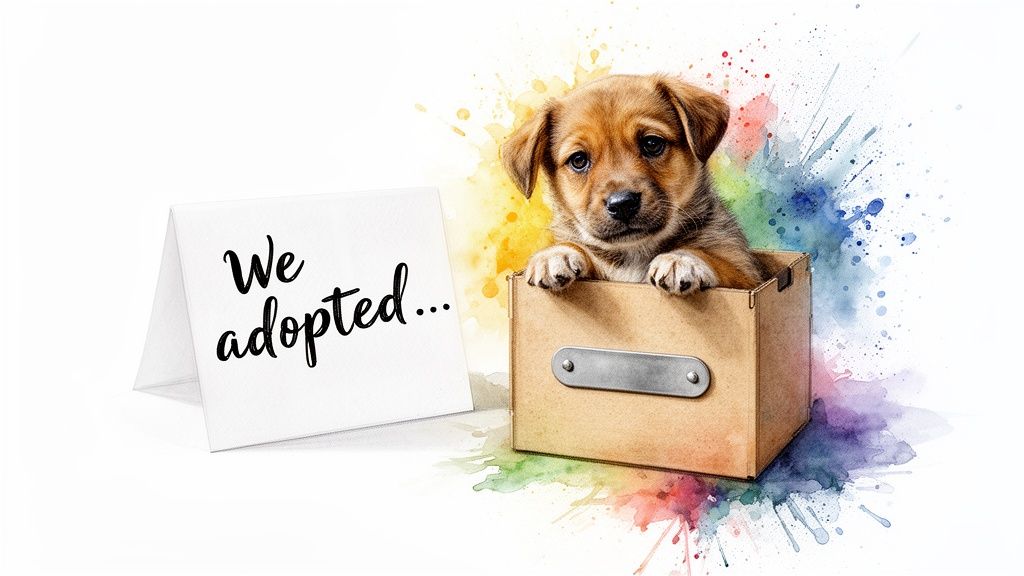
This goes beyond a quick text message or a social media post; it creates a lasting memento of a life-changing day. The goal is to convey the profound happiness and sense of purpose that comes with adoption, making your friend an immediate and essential part of your new family circle. It’s a chance to articulate not just what you did, but why this new companion already means so much.
How to Tell the Story of "Hello"
A letter filled with this kind of excitement focuses on storytelling and heartfelt detail. It shows your friend that they are one of the very first people you wanted to share this enormous piece of your heart with.
Recounting the Adoption Story: Sharing the small details makes the day special. Describing the drive to the shelter, the first time you saw them, and that undeniable moment you knew they were the one brings your friend right into the experience with you.
Introducing Their Personality: Going beyond just their name and breed helps paint a picture. Describing their funny quirks with affection, like, "She has this funny habit of tilting her head whenever I say her name, and her favourite toy is already a crumpled-up receipt," shows who they are.
Acknowledging the New Reality: Being honest about the adjustment adds a layer of authenticity. Mentioning the funny chaos of a new puppy or the gentle patience required for a timid rescue cat shows you’re embracing the whole experience, challenges and all.
Inviting Them to Meet: A clear, warm invitation makes them feel central to this new chapter. A simple, "I genuinely cannot wait for you to meet her," or "The first official 'auntie' visit is reserved for you," makes it clear they are part of this journey.
3. A Letter About a Simple Moment with a Pet
Sometimes, the most profound connections are found not in grand events, but in the small, unremarkable moments of daily life. Sending a letter to your best friend that captures one of these simple interactions with your pet is a way to share a piece of your inner world. This type of letter isn't about telling a big story; it's about noticing the texture of a single, fleeting moment and finding the depth within it, transforming an ordinary observation into a shared experience of warmth and presence.
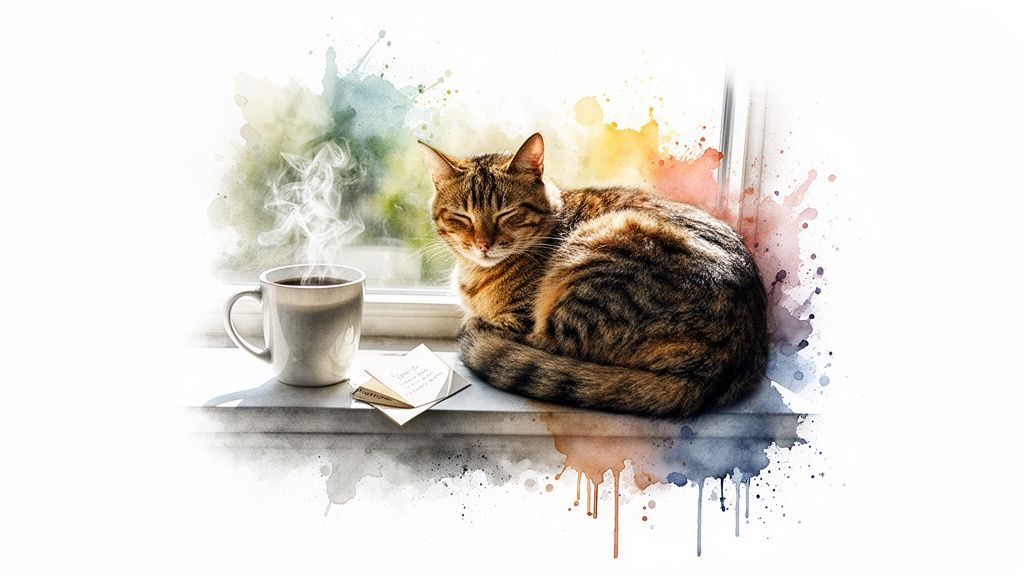
This approach is about slowing down enough to see the beauty in the mundane, like the way your cat’s fur catches the afternoon sun or the gentle rhythm of your dog’s breathing as he sleeps at your feet. By putting this experience into words for your friend, you invite them into that space of calm reflection, reinforcing the idea that your bond is strong enough to hold these gentle, personal revelations.
How to Share an Ordinary Observation
Crafting this letter is an act of mindful observation. It’s less about recounting an event and more about painting a picture of a feeling, allowing your friend to experience the moment alongside you.
Choosing a Genuinely Affecting Moment: Select an instance that truly resonated with you. It could be the funny way your rabbit twitches its nose while dreaming or the soft weight of your cat settling onto your chest. Authenticity is what makes it meaningful.
Using Concrete Sensory Details: Bring the scene to life by focusing on what you saw, heard, and felt. Mention the “faint smell of rain on the windowpane,” the “rumble of her purr against my ribs,” or the “soft click of his nails on the hardwood floor.”
Explaining Why It Mattered: Gently unfold the significance of the moment. Did watching your pet’s peaceful sleep make you feel a sense of calm during a stressful week? A simple line like, “Watching him, I felt the whole day’s tension just melt away,” can be incredibly powerful.
Letting the Meaning Emerge Naturally: The description of the moment itself can be simple and unadorned. You don’t need to explain your pet’s overall importance; your careful observation will imply the depth of your bond. The emotion is in the details you choose to share.
4. A Letter Asking for Support During an Illness
Anticipatory grief, the sorrow we feel before a loss, is a heavy and often isolating burden. When a beloved pet is facing a serious illness or end-of-life care, a letter to your best friend can be a way to ask for the specific support you need without having to say the words out loud. This is not a letter asking for solutions; it's a raw, vulnerable request to be seen and held in a period of painful uncertainty and difficult decisions.
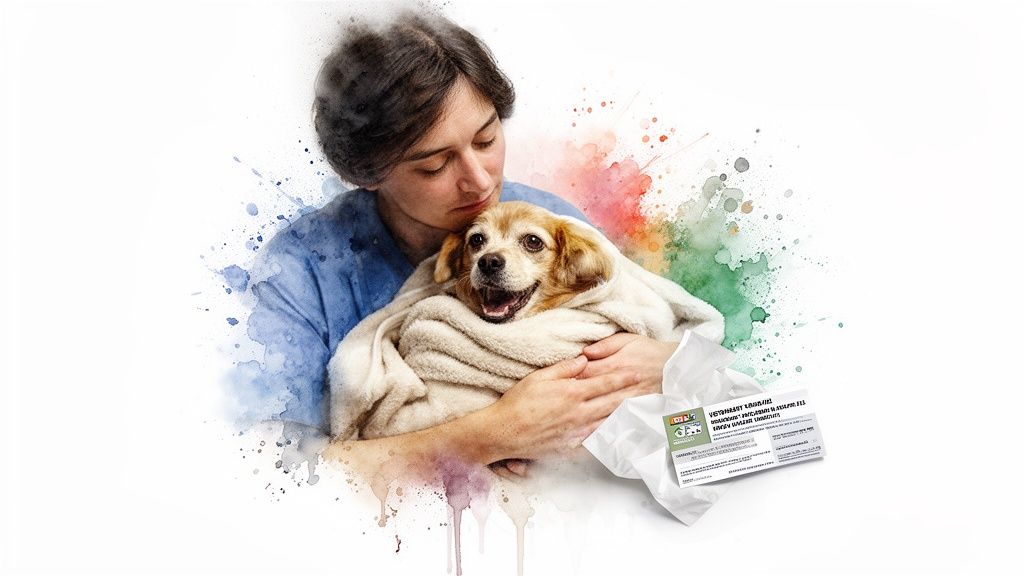
This type of letter acknowledges the immense emotional weight of caregiving for a declining animal companion. It allows you to share your fears, exhaustion, and deep love for your pet, inviting your friend into your experience not as a problem-solver, but as a compassionate witness. It’s an act of trust that honours the depth of your friendship.
How to Voice a Need for Help
A letter written from this vulnerable place prioritises honesty over composure. It’s about letting your friend know exactly what you’re going through and what would genuinely help, creating a space for true empathy.
Being Specific About Your Feelings: There's no need to be strong. Sharing the reality of your experience is enough. You could write, “I feel so scared every time I have to give Daisy her medicine,” or “Watching him weaken is breaking my heart in a way I didn’t expect.”
Explaining What Your Pet Means to You: Articulating why this process is so profound helps your friend understand. A simple sentence like, “Benny has been my steadiest companion through everything, and the thought of this home without him is unbearable,” conveys the magnitude of the impending loss.
Naming the Support You Need: Your friend wants to help but may not know how. Being direct can be a relief for both of you. You could ask, “Could you just sit with me on the sofa this week, no need to talk?” or “I really need a distraction. Can we watch a stupid film and not mention any of this for a few hours?”
Writing Without Apology: Your grief is valid. Avoid apologising for the depth of your feelings about your pet. Your letter is a testament to a significant bond, and owning that truth allows your friend to support you authentically.
5. A Letter of Gratitude for a Friend’s Support
The challenges of pet parenthood, whether navigating an illness, a difficult adjustment, or a devastating loss, are often profoundly personal. When a best friend steps into that space with true understanding, their support is a rare and precious gift. A letter to your best friend becomes a powerful way to acknowledge their kindness, celebrating a friendship that honours the deep connection we have with our animals. This isn't just a thank-you note; it's a recognition of their empathy and presence during a time when many others might not have understood the weight of the situation.
This kind of letter affirms that their actions mattered immensely. It tells your friend that they didn't just help you, but they also honoured your animal companion. It’s a chance to articulate what their specific gestures meant and to celebrate the kind of friendship that sees and supports every part of your life, paws and all.
How to Say "Thank You" with Meaning
A letter of gratitude focuses on sincerity and specific details. It moves beyond a general "thank you" to show the tangible impact of their support, making your friend feel truly seen and appreciated.
Naming the Specific Action: Pinpointing exactly what they did that meant so much makes the gratitude real. Instead of a vague "thanks for everything," try, "The way you sat with me on the floor for hours after Millie's diagnosis, just letting me cry, meant the world to me."
Explaining Its Impact: Connect their action to how it made you feel. For example, "When you brought over food so I wouldn't have to think about cooking, you gave me the space I desperately needed to just be with Alfie in his final days."
Acknowledging Their Understanding: Many people don't grasp the depth of the human-animal bond. Acknowledging this by saying something like, "Not everyone 'gets it,' but you never once made me feel like I was overreacting. Your validation was a lifeline," shows how much their empathy mattered.
Affirming the Friendship: Ending on a note that looks forward reinforces your bond. A simple, "I am so incredibly lucky to have a friend like you" or "Your friendship is one of the greatest comforts in my life" brings the focus back to your enduring connection.
6. A Letter Celebrating a Pet’s Unique Personality
Our pets are more than just companions; they are characters with distinct, often hilarious, personalities. Their strange habits and unwavering opinions fill our homes with an incredible amount of joy and absurdity. Writing a letter to your best friend that chronicles these quirks is a wonderful way to share a slice of your daily life and celebrate the unique spirit of your animal. It's an invitation for your friend to laugh along with you at the funny, endearing, and downright bizarre behaviours that make your pet who they are.
This kind of letter isn't about telling a grand story; it’s about capturing the small, comedic moments that define your relationship with your pet. It’s a snapshot of the delightful chaos, a shared secret between you, your pet, and your friend. By documenting these eccentricities, you're not just being humorous; you're honouring the genuine, albeit strange, personality that has become a central part of your world.
How to Capture a Pet’s Character on Paper
A playful letter finds its charm in specificity and affection. It’s about illustrating your pet's character with such vivid detail that your friend can perfectly picture the scene and share in the amusement.
Highlighting Specific Behaviours: Real quirks are always funnier than generic observations. Instead of saying your dog is silly, describe the elaborate, three-spin ritual he performs before settling on the sofa. Mentioning specifics, like "You know how Milo refuses to eat if his bowl isn't positioned exactly northeast," makes the story relatable and authentic.
Letting Their Personality Shine: It can be fun to write as if you’re translating your pet's thoughts. Capturing their diva-like demands, their specific tastes, or their unshakeable belief that the postman is their sworn nemesis gives the letter a voice that feels both personal and incredibly funny.
Balancing Humour with Affection: The goal is to laugh with your pet, not at them. Framing their eccentric habits as endearing traits you wouldn't change for the world ensures the humour lands as a celebration of their character.
Using Sensory Details: Bring the pet to life on the page. Describe the sound of your cat's demanding meow for breakfast at 5 a.m. or the sight of your dog triumphantly carrying a stolen sock. These details make the stories feel immediate and real, letting your friend step right into the moment with you.
7. A Letter Reflecting on How a Pet Changed You
Sometimes, the most profound changes in our lives happen not through grand events, but in the gentle, steady presence of an animal companion. Writing a letter to your best friend about how your pet has reshaped your world is a deeply introspective act. It’s an opportunity to examine the ways a furry, feathered, or scaled friend has altered your daily rhythms, priorities, and your very understanding of love and patience.
This type of letter moves beyond simple updates about your pet’s antics. It delves into the story of what living with and caring for another being teaches us about ourselves. Sharing these realisations with a best friend validates the journey and honours the significant, often unspoken, impact of the animal-human bond.
How to Articulate Personal Growth
A letter like this is most powerful when it grounds abstract feelings in concrete, everyday moments. It’s about showing, not just telling, how this companionship has fostered a shift within you.
Grounding Reflections in Specifics: Instead of saying, “My cat taught me patience,” describe the feeling of waiting calmly by the door for ten minutes until he finally decides to come inside. Connect the lesson to a tangible, repeatable moment.
Exploring Shifts in Routine: Detail how your daily life has changed. Mention waking up earlier for a walk, the ritual of preparing their meals, or how your evenings now centre around a warm lap. These small acts accumulate into a significant shift in perspective.
Being Honest About Challenges: Growth isn’t always easy. Acknowledging the frustrations or anxieties that come with pet parenthood makes the reflection more authentic and relatable. Sharing the difficult parts, like worrying about their health, gives a fuller picture.
Naming the Lessons Learned: Consider what your pet's non-judgmental presence has taught you about self-acceptance or vulnerability. A simple, “Watching him nap without a care has reminded me that it’s okay to just be,” can be a powerful sentiment to share in a letter to your best friend.
8. A Letter Admitting the Struggles of Pet Parenthood
Pet ownership is often painted with a single, idyllic brushstroke, but the reality is far more textured and complex. When the challenges of vet bills, behavioural issues, and the sheer exhaustion of caregiving feel overwhelming, a letter to your best friend can be an essential release valve. It’s a space to be candid about the non-Instagram-perfect side of pet parenthood without fear of judgment. This letter isn’t a sign of regret; it’s an honest admission that loving a dependent creature can be incredibly hard.
This kind of communication moves beyond the highlight reel of cuddles and tricks. It creates a sanctuary for vulnerability, allowing you to confess the difficult feelings that often accompany the immense responsibility of caring for an animal. A letter gives you permission to say, "I love this being with my whole heart, but right now, I am struggling."
How to Write with Vulnerability
This letter is about seeking understanding, not just solutions. It’s a way to articulate the messy, contradictory feelings of being a dedicated but weary pet parent, and to remind yourself you’re not alone in these feelings.
Being Specific About the Hardship: Vague complaints can sound like you don't love your pet. Instead, detail the actual struggles. For example, “The vet bills for Luna’s allergies have completely drained my savings,” or “Albie’s separation anxiety means I haven't had a full night's sleep in weeks, and I feel like I'm failing him.”
Affirming Your Commitment: It's important to distinguish between struggling with the situation and regretting your pet. Acknowledge the bond that keeps you going. A phrase like, “I would never, ever give him up, but some days I just don’t know if I have what it takes,” validates both your love and your exhaustion.
Stating What You Need Clearly: Don't make your friend guess. Be direct about the kind of support you're seeking. You might write, “I don’t need advice right now, I just really need you to listen and tell me I’m not a terrible person for feeling this way,” or “Could we just get away for a couple of hours this weekend so I can feel like myself again?”
Acknowledging That Love and Hardship Coexist: Reinforce the idea that loving something deeply and finding it difficult are not mutually exclusive. This is a core truth of any caregiving role. Writing it down helps normalise the feeling and allows your friend to see the complete picture of your experience.
8-Item Comparison: Letters to Your Best Friend — Pets
Letter Type | Implementation Complexity | Resource Requirements | Expected Outcomes | Ideal Use Cases | Key Advantages |
|---|---|---|---|---|---|
Heartfelt Letter Sharing a Pet Loss | Moderate — requires personalization and sensitive tone | Emotional labor; specific memories; thoughtful timing | Validates grief; offers comfort and ongoing solace | After a pet's death; consoling a close friend | Deep empathy; strengthens bond; re-readable comfort |
Excited Letter About Adopting a New Pet | Low — celebratory, descriptive writing | Enthusiastic anecdotes; optional photos; brief time investment | Shares joy; creates anticipation and invitation | Announcing an adoption; inviting friend to meet the pet | Spreads joy; deepens shared experiences; uplifting |
Reflective Letter Sharing a Quiet Moment With Your Pet | Moderate — attentive, sensory writing style | Time for observation; sensory detail; contemplative language | Fosters presence; deepens appreciation for small moments | Sharing everyday intimacy; mindful connection with a friend | Cultivates presence; subtly moving; models slow attention |
Vulnerable Letter Asking for Support During Pet Illness | High — raw honesty and clear requests required | High emotional labor; specific needs; careful timing | Mobilizes support; deepens trust; aids emotional processing | During serious illness or end-of-life care | Authentic vulnerability; invites concrete help; strengthens support |
Grateful Letter Thanking Your Friend for Pet-Related Support | Low — straightforward, specific acknowledgment | Accurate memory of actions; sincere tone; brief time | Reinforces appreciation; strengthens friendship | After receiving help during illness, loss, or transition | Validates caregiver effort; low-stakes; strengthens ties |
Playful Letter Celebrating Your Pet's Quirks and Personality | Low to Moderate — relies on well-chosen humor | Specific anecdotes; sense of audience humor; light tone | Generates laughter; creates joyful connection | Light updates; mood-lifting messages; social sharing | Brings levity; fosters connection through humor; approachable |
Contemplative Letter Reflecting on How Your Pet Changed You | High — deep introspection and grounded examples needed | Time for reflection; concrete anecdotes; emotional honesty | Promotes self-understanding; deepens intimacy and meaning | Milestones, personal essays, or intimate confessions | Meaningful insight; documents growth; philosophically rich |
Honest Letter Admitting Struggles With Pet Parenthood | Moderate to High — requires careful framing to avoid misreadings | Specific examples of challenges; emotional honesty; possible asks | Normalizes difficulty; invites empathy or practical help | When overwhelmed, burned out, or seeking nonjudgmental support | Authenticity; reduces isolation; encourages solutions and support |
A Record of What Mattered
We've walked through the many landscapes a friendship can occupy, from the vibrant peaks of shared celebration to the shadowed valleys of grief and uncertainty. Each sample letter, whether it was sharing the hilarious quirks of a new rescue or leaning on a friend during a pet’s illness, served as a map to a specific emotional territory. The true purpose wasn’t to hand you a pre-drawn route, but to show you how to chart your own.
Writing a letter to your best friend is less about literary perfection and more about emotional preservation. It’s an act of saying, ‘This moment, right here, is worth remembering. This feeling deserves to be seen. You deserve to know the space you hold in my life.’ When you put pen to paper, you are not just communicating; you are creating an artefact of your connection. It becomes a tangible piece of your shared history, a small monument to a bond that withstands distance, time, and life’s unpredictable turns.
The letters we explored, from celebrating a pet's odd habits to admitting the struggles of pet parenthood, all share a common thread: vulnerability. It’s the honesty in admitting you’re overwhelmed, the openness in sharing unbridled joy, and the courage to ask for help when your animal companion is unwell. This is the true heart of a meaningful letter. It’s a space where you can be wholly yourself, knowing you are writing to someone who will receive your words with care and understanding.
Your Words, Your Friendship
The most powerful takeaway is that there is no single right way to write these letters. Your voice, your memories, and your unique connection are the only ingredients you truly need.
Embrace the Specifics: Don't just say your dog is funny. Describe the way he chases his tail only on Tuesdays or the ridiculous snorting sound he makes when he’s excited. These details are the soul of your story.
Honour the Emotion: Whether it's the profound sadness of loss or the gratitude for a friend’s support, let the feeling guide your words. Your letter is a safe container for that emotion.
It’s Not a Performance: Remember who you are writing to. This isn’t an essay for a stranger; it’s a conversation with your person. Let go of the pressure to be eloquent and instead aim to be genuine.
Ultimately, these letters are a record of what mattered. They capture the fleeting moments that define our lives and our relationships. They are proof that in a world that moves so fast, we took the time to pause and acknowledge the connections that anchor us, the companions that comfort us, and the friends who see us through it all. Sending a letter to your best friend is a small act with a profound impact. It strengthens the ties that hold you, creating a lasting reminder that you are known, you are valued, and you are not alone. It is a powerful celebration of a bond that makes everything else feel a little more manageable.
For those moments when you want to give a feeling a physical form, Soulknit offers a collection of thoughtfully curated journals and letter-writing sets designed to honour meaningful connections. Explore our collection to find the perfect space for your own words at Soulknit.

Comments