
A Call in the Dark
- Soulknit
- Feb 8
- 8 min read
It often begins as a low hum, a vibration you feel before you hear. Then it swells, rising into a long, soulful cry that fills the quiet of the house and pulls you from sleep. When a dog howls in the middle of the night, it can feel like a crack in the peaceful fabric of your home.
There’s something ancient in that sound. It feels both deeply personal and impossibly wild, a noise that cuts through the ordinary rhythms of the night—the gentle buzz of the fridge, the soft rustle of sheets. This sound is different. It is a sound that asks to be heard.
The Sound That Stirs You From Sleep
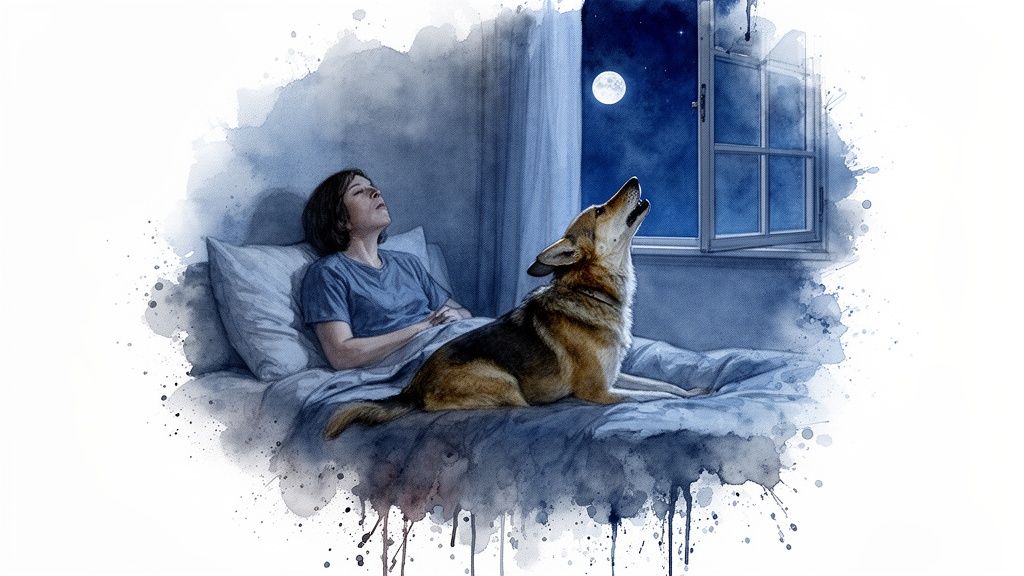
I remember this with my old dog. He would do it on nights when the moon was especially bright, casting long shadows across the garden. His first howl would lift me from a dream, and I’d lie there, perfectly still, just listening. It was never a sharp bark of alarm, but something else—a lonely, drawn-out call that seemed to hang in the air long after it finished.
My first reaction was never annoyance. It was always a quiet wave of concern. Was he hurt? Scared? It felt like he was speaking a language I almost understood but couldn’t quite decipher. That sound was a question mark, floating in the dark of our shared home.
It is an experience many of us who share our lives with dogs know well. That sudden, piercing sound is a reminder of the other life breathing in our space, a life with its own instincts, fears, and needs. This nightly call isn't just a problem to be solved, but a message to be understood. It’s an invitation to listen more closely to the companion who shares our quietest hours.
An Echo of the Wild
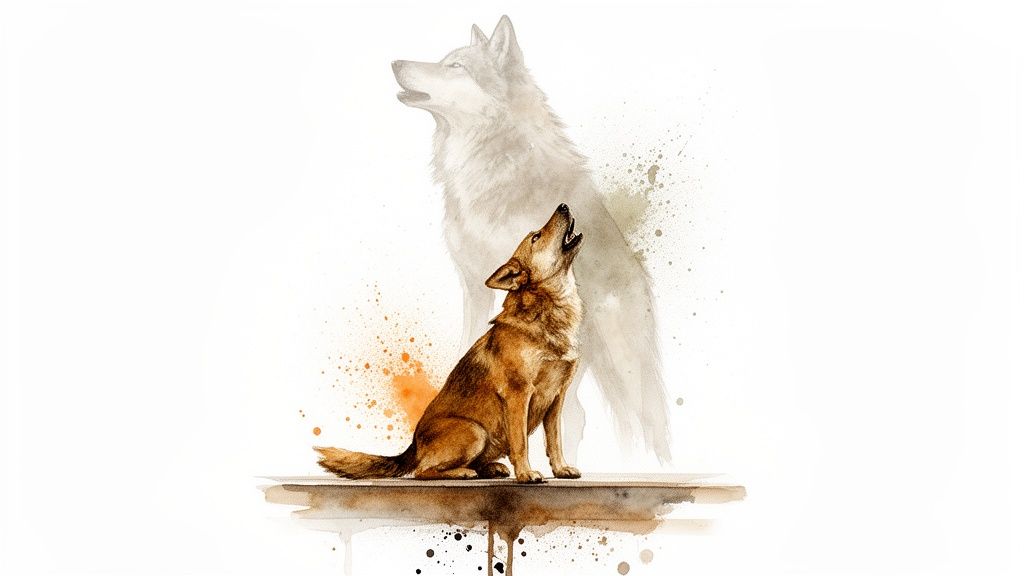
That long, mournful sound is an ancient language. It is a thread of pure instinct connecting the soft companion at your feet to their wild ancestors. When a dog finally finds her voice in the dead of night, she is often trying to make sense of her world—drawing invisible lines in the air and saying, simply, “I am here.”
Think of it as a holdover from a time when survival depended on the pack. For wolves, a howl is a tool: a gathering call, a warning to rivals, a lifeline to find one another across vast landscapes. Our dogs, though generations removed from that life, still carry that echo. When your dog is howling at night, they might be doing their own version of this, staking a claim on their space—a territory that now includes your home, your garden, and you.
But this primal call is also about connection. Your dog’s pack looks different from a wolf’s. It is smaller, more intimate, and often, it’s just you. That heartfelt cry could be their way of doing a roll call, a vocal check-in to make sure their family is safe. It’s a beautiful, if startling, glimpse into their inner world. They aren't just making noise. They're speaking a language of loyalty and belonging. This has been observed in studies on howling behaviour in street dogs, who use it to maintain their communities.
Sometimes, though, the reason is much simpler. It’s a response to feeling alone. As the house settles into a deep quiet, a dog can feel a profound sense of isolation. Their howl becomes a question sent out into the darkness: “Is anyone else there?” It’s a vulnerable sound, a raw expression of their need for reassurance. Once we understand the heritage of the howl, we can hear it not as a disturbance, but as an honest part of who our companions are.
A Conversation with the Night

Sometimes, that mournful howl isn't for us. It's a conversation with a world we can't fully hear, a response to a symphony playing just outside our windows.
A dog’s ears are incredible instruments. They can catch the faintest rustle in the bushes, the distant yip of another animal, or the high-pitched wail of a siren long before it reaches us. To them, these aren't just background noises. They're messages demanding a reply.
I remember watching my dog Leo do this. He’d be asleep when his head would suddenly lift, ears twitching. A moment later, a long, clear howl would rise from his chest, aimed at the window. He was answering something I couldn't hear yet. Sure enough, seconds later, the faint sound of an ambulance would finally reach me. To Leo, that siren wasn't just a mechanical noise. It was a call from a distant pack, a high-frequency lament that sounded so much like another dog’s cry that he felt an instinctual pull to answer. This is more common than you might think, as confirmed by fascinating findings on canine howling behaviour.
So, when your dog howls at night, they are often just taking part in a conversation we're not privy to. Their world is layered with information that sails right past us. That piercing sound is their reply, a way of saying, “I hear you out there.” It’s a glimpse into the rich, complex sensory world our dogs navigate every moment, even as we sleep. They are simply answering the world, and in doing so, reminding us just how much there is to listen to.
A Signal from Within
Sometimes, the howl you hear isn’t a response to a siren or a neighbor’s cat. It's a different sound—softer, more fragile. This howl isn’t about the world outside; it’s a signal from the world within your dog, a quiet broadcast of a feeling that has no other way to escape.
This kind of howl can rise from a deep well of loneliness. Our dogs are so connected to us that our absence can feel like a crushing silence. The quiet house, once a comfort, can suddenly feel vast and empty. Their howl becomes an attempt to fill that void. At other times, it’s a spike of anxiety finding its voice. A subtle shift in their routine—a new home, a change in your schedule—can be enough to throw their world off-kilter. That howl is a question mark hanging in the air, a plea for reassurance that everything is still okay.
I’m reminded of a friend's elderly dog, Max. For twelve years, he had slept at the foot of her bed. As he got older, the stairs became too much for his hips, so she set up a cozy bed for him downstairs. The first few nights were filled with a low, heart-wrenching howl. It wasn't a demanding bark. It was the sound of a creature whose lifelong routine had been pulled out from under him. He was calling out for the familiar sound of her breathing, for the simple comfort of knowing his human was close.
A howl isn't always a deliberate message. Often, it's an involuntary release—an outward sign of a deep, inner need. It can also be a quiet flag of physical discomfort. An arthritic joint that stiffens in the cool night air or the cognitive confusion of old age can surface as a vocal plea. This isn’t a cry for pity. It’s an honest report from a body doing its best to cope. These are the moments that call for our gentlest attention, strengthening our bond of care as we hear the things our companions can’t tell us in words.
A Quiet, Steady Presence
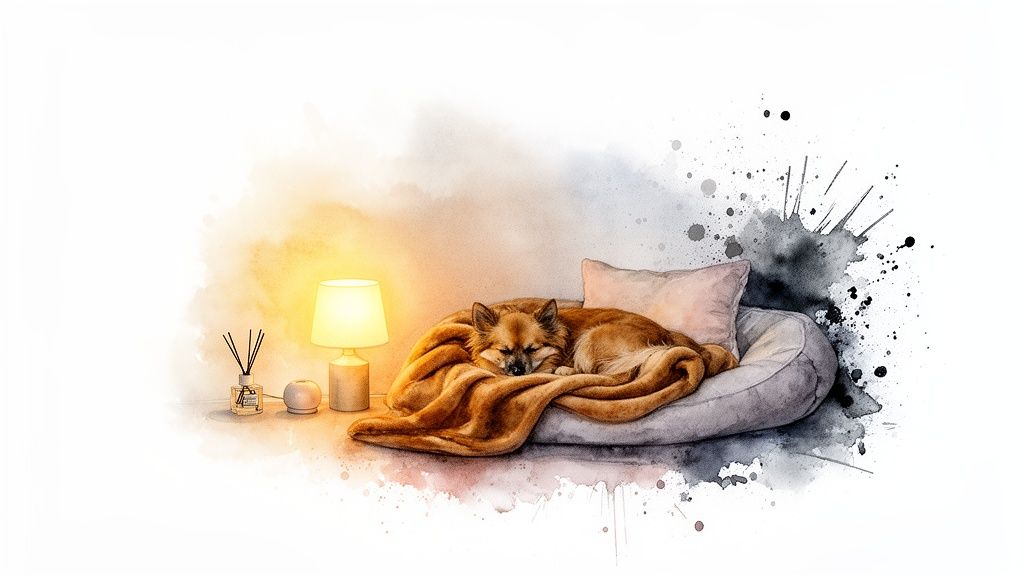
When you begin to understand the story behind the howl, your response naturally shifts. It stops being about frustration and starts being about offering a quiet, steady presence. Instead of trying to silence the noise, you begin to focus on building a deeper sense of security.
The most powerful changes rarely come from sharp commands. They come from the small, gentle ways we shape our shared space into a haven of calm. It’s an act of deep listening, where we answer their call not with words, but with gentle care.
I learned this from an old, nervous soul named Millie who would howl every time a storm rolled in. Her person never shushed her. Instead, she would take Millie’s favorite worn blanket to the quietest corner of the house and just sit with her. Soon, the sound of her own steady breathing became the loudest thing in the room. That little ritual wasn't a quick fix; it was an anchor. It told Millie, without a single word, that this space was safe and she wasn't alone.
Creating this sanctuary is less about grand gestures and more about thoughtful, consistent details. It’s about cultivating an atmosphere where your dog feels held and secure, lessening the urge for a dog howling at night to call out. A soft bed in a quiet corner can become a personal retreat. A familiar scent, like an old t-shirt that smells of you, can offer a reassuring presence. The low hum of a white noise machine can soften the startling sounds from outside. The goal isn’t to create a silent home, but a secure one. You’re building a foundation of peace so deep that the need to send out a lonely call simply begins to fade.
Listening to the Silence That Follows
The goal was never to silence the howl, but to understand its story. It’s easy to think of noise as a problem that needs fixing. But when you share your home with an animal, you sign up for a journey of shared moments—the loud, the quiet, and everything in between.
It’s in these times—waking in the dark, offering a soft pat or a quiet word, and waiting for peace to settle again—that a relationship is truly forged. The real bond isn't built on perfect, silent nights. It’s built in the willingness to show up when things are a little unsettled. It’s a quiet acknowledgement that their world and yours have beautifully, and sometimes noisily, overlapped. True companionship is found in the willingness to listen, especially when no words are spoken.
This shared experience becomes part of your story together, a narrative of care we explore in our collection of Soulknit: Short Stories About Pets and Their People. And the silence that eventually follows a howl? It’s different. It feels earned, settled. It’s a quiet filled not with absence, but with the warm presence of your companion sleeping soundly nearby, their heart finally at ease.
Questions in the Night
When that sound cuts through the quiet, it can stir up all sorts of questions. It's natural to wonder what our companions are trying to tell us.
Does a howl mean my dog is sad or in pain?
It can. A howl is often an emotional sound, and sometimes it really is a sign that your friend is feeling lonely, anxious, or uncomfortable. A sudden change in their behaviour—like howling when they never used to—is a quiet signal. It’s an invitation to look a little closer at their world and perhaps share what you’ve noticed with a vet.
Why does my dog howl at sirens?
To a dog's sensitive ears, the high-pitched wail of a siren can sound uncannily like the howl of another dog. For many dogs, hearing that sound triggers an ancient, hardwired need to answer back. It’s an automatic response to a call they perceive from the world outside.
How can we have a quiet night again?
Bringing peace back to your nights is less about silencing the howl and more about nurturing a deep sense of security. Simple, quiet rituals can offer profound reassurance. Spending calm moments together before bed, making sure their sleeping spot feels like a safe den, or playing soft background noise can soothe an anxious heart. Responding with gentle presence often speaks louder than any command. For more stories about these deep connections, you can explore the heart of our community at Soulknit.

Comments